
Generative Engine Optimization (GEO) has rapidly emerged as a crucial component of digital marketing, influenced by the rise of AI-powered search engines such as ChatGPT, Perplexity, and Gemini.
So, while Google Search Console, Google Analytics, and other platforms such as Ahrefs or SEMrush provide details regarding your website’s performance in classic search engines like Google or Bing, how do you measure your performance in Generative Engines?
Classic search engines, such as Google or Bing, include Google Analytics, SEMrush, and Ahrefs, which measure your website’s or brand’s online performance. You can measure how often users enter your website, where they come from, and whether they came from organic or referral sources, among many other parameters.
But how can you measure your performance in AI-based tools or generative engines, such as Perplexity, Gemini or ChatGPT? How can you measure how often your website is cited in the generative answers? How can you understand what to do to improve your website, brand citation, or mention in the generative answers?
Here is our selection of tools to use when you want to work on your generative engine optimization – the best generative engine optimization analytics tools. The generative engine optimization analytic tools we tested help businesses measure and optimize their online presence to appear prominently and accurately in AI-generated search results.
This article provides an expert-curated list of the top Generative Engine analytics tools in 2025, with their key features, benefits, and pricing information.
Methodology for Ranking the Generative Engine Optimization Tools
The tools featured in this ranking were assessed based on a detailed set of criteria to evaluate their comprehensive capabilities, analytical depth, ease of use, cost-effectiveness, and overall effectiveness in optimizing brand visibility in generative search environments. Specifically, the methodology involved:
- Comprehensive Features Assessment: Tools offering extensive GEO functionalities, such as content optimization, citation tracking, and competitor benchmarking, received higher rankings.
- Analytical and Auditing Capabilities: Tools with advanced analytics, auditing capabilities, and actionable insights scored higher because they can effectively inform strategic marketing decisions.
- Real-time Monitoring and Integration: Tools providing real-time data monitoring, alerts, and seamless integration with popular marketing platforms were prioritized.
- Cost-Effectiveness and Accessibility: Free or reasonably priced tools that offer substantial value, particularly beneficial for smaller businesses, were included but ranked lower due to typically narrower feature sets.
The ranking is designed to help businesses choose GEO tools best suited to their marketing strategies, objectives, and budget constraints.
Top Generative Engine Optimization (GEO) Tools
The tools are ranked based on their comprehensive features, including their ability to monitor brand visibility, analyze AI crawler interactions, and provide actionable insights for content optimization
1. Rankscale.ai
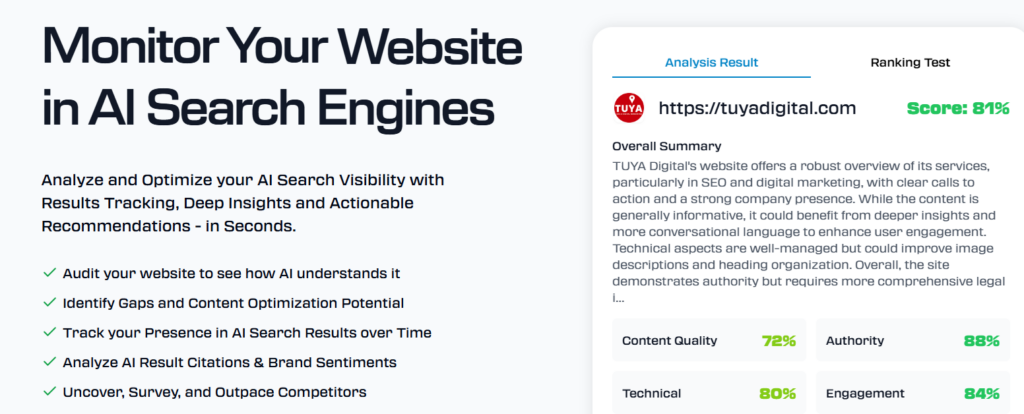
Rankscale.ai offers an extensive suite of GEO tools, including content audits, citation tracking, and competitor analysis, to maximise brand visibility in generative search environments.
As seen above, we tried rankscale.ai, which offered tuyadigital.com an 81% optimisation score for the Generative Engines. Not bad, not great, so to speak. We’ll try to check their scale and criteria over the next weeks to understand what hindered our efforts to get a top score on their platform.
They also offered us a report, which is free.
Key Features:
- AI-optimized content recommendations
- Citation tracking and sentiment analysis
- Competitor benchmarking
Pros:
- Ideal for comprehensive GEO strategies
- Deep analytics capabilities
- Custom enterprise solutions
Pricing: Custom pricing tailored for enterprise clients.
Overall, a good tool; we were satisfied with the experience on this platform.
2. SEMRush
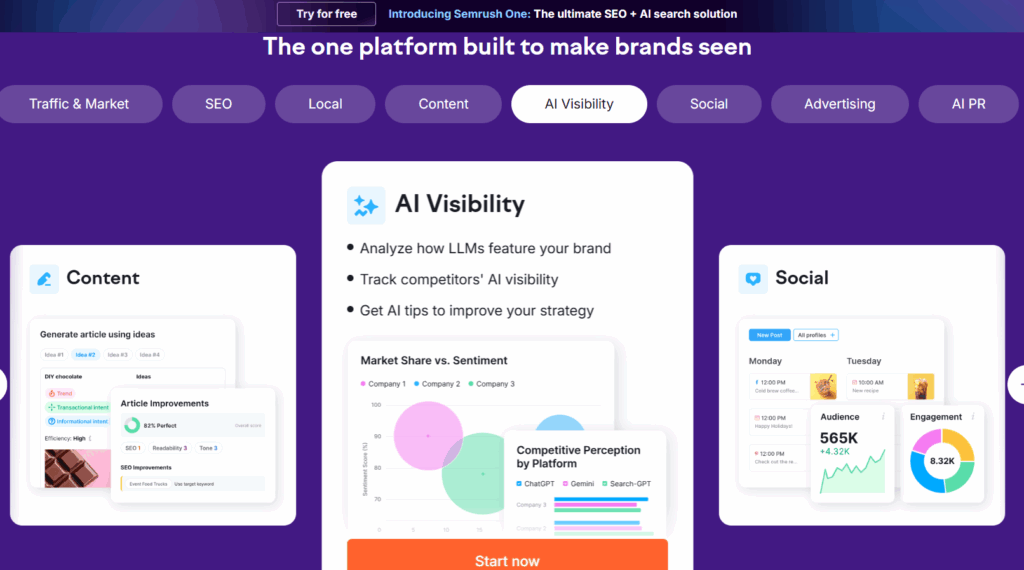
SEMrush is no longer just an SEO/keyword tool — it now includes AI-era monitoring, AI Overviews tracking, AI-assisted content, and visibility reports for Google’s AI results, Perplexity-style answers and other generative surfaces. This makes it a practical choice for teams that already work with SEMrush but now require GEO/LLMO data in addition to classic SEO.
As in the tests above, we ran SEMrush on tuyadigital.com using the new AI visibility components, and it correctly picked up queries that trigger AI Overviews and shifts in SERP volatility. It didn’t give us a “single GEO score” like Rankscale. Still, it did give enough AI-specific signals (which pages appear, which intents are at risk, which competitors are gaining AI exposure) to be useful for GEO planning.
Key Features:
- AI Overviews / AI search visibility tracking
- AI-assisted content briefs and optimisation
- Competitor discovery with AI recommendations
- Site audits and technical issue detection
Pros:
- Mature database + new AI layers in one place
- Good for teams already using SEMrush daily
- Useful early warning for AI stealing traffic
Pricing: based on standard SEMrush plans; AI/visibility / “One” features available on higher tiers.
Overall, SEMrush is a solid choice if you want to extend an existing SEO workflow into the generative-search era without changing tools. It won’t give you a single GEO score, but it will give you the AI signals you actually need.
3. SE Ranking
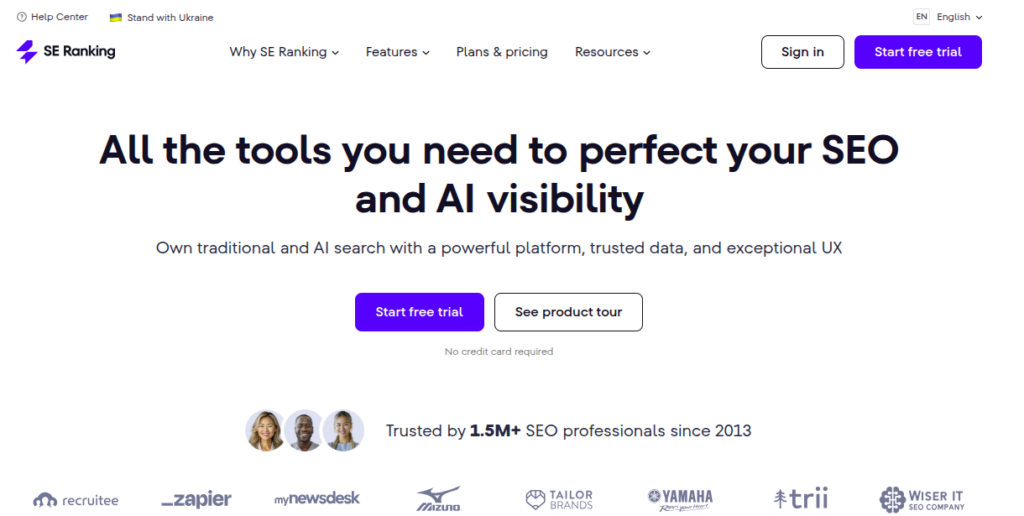
SE Ranking is a software that combines traditional SEO rank tracking and competitor analytics tools with a GEO optimization toolkit. Its GEO features allow users to track mentions and links in multiple AI search systems from AI Overviews to Perplexity and across multiple languages. SE Ranking AI features come with all SEO plans, so existing users don’t have to pay extra. It’s also a solid choice for teams that want to combine classic SEO and GEO analytics.
The AI toolkit provided by SE Ranking can track mentions and links across the most popular AI search systems, provide data on overall brand visibility and visibility in the top 3 results, as well as showcase cached AI responses and lists of websites cited as sources. This provides data for understanding what context your brand appears in and finding potential partnerships with websites from the source list.
Key Features:
- Suite of traditional SEO tools.
- Tracking brand visibility across AI Overviews, AI Mode, ChatGPT, Perplexity, and Gemini.
- Competitor AI visibility analysis.
- Cashed AI responses & source lists.
- AI-assisted content brief creation & draft writing.
Pros:
- Suite of SEO tools with a massive database of keywords and links.
- AI search tracking and competitor analytics.
- Suite of content marketing tools.
Pricing: Free trial available, pricing starts at $129/month.
Overall, SE Ranking is a solid option for combining SEO and GEO in a single tool. It provides a detailed analysis of AI visibility that can be used to improve your strategy and track its performance.
4. Otterly.AI

Otterly.AI excels in tracking brand visibility across major AI search engines, offering insights into brand mentions, link citations, and sentiment analysis within generative search results.
We tried it, but it seems the platform lacks some features in thoroughly searching the generative search engines to understand one’s brand presence. On the other hand, some of their features are still in beta.
Key Features:
- AI search brand monitoring
- Real-time sentiment analysis
- Actionable weekly reports
- Integration with popular marketing platforms
Pros:
- User-friendly dashboards
- Comprehensive AI search monitoring
- Real-time alerts
Pricing: From $29/month (annual discounts available).
5. BrandRank.AI
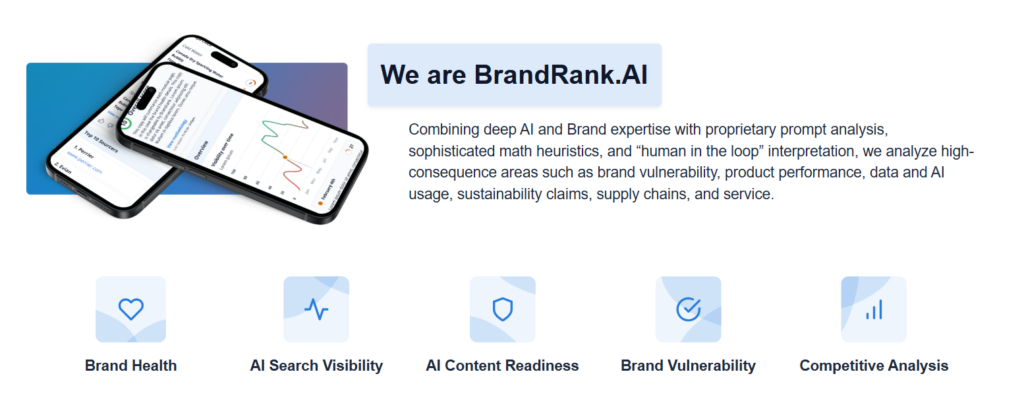
BrandRank.AI specializes in comprehensive audits and performance tracking across leading generative AI platforms, ensuring businesses maintain visibility and relevance.
Key Features:
- Ongoing AI platform monitoring
- Competitive benchmarking
- Customized insights and reporting
Pros:
- In-depth brand audits
- Highly actionable recommendations
- Robust analytics
6. Writesonic AI Traffic Analytics
Writesonic provides advanced analytics on AI crawler behavior, enabling content optimization tailored specifically for generative AI visibility.
They only let you use their GEO feature only after paying a subscription.
Key Features:
- Detailed AI crawler tracking
- AI-driven content optimization
- In-depth analytics and reporting
Pros:
- Unique insights into AI interactions
- Effective optimization recommendations
- Integration with Writesonic’s content tools
Pricing: Free trial available; paid plans start at $49/month.
7. Peec.ai
Peec.ai provides sophisticated analytics that empower marketing teams to optimize brand visibility across AI-driven search engines strategically.
They let you track your position for prompts, but only let you actually do the tracking after paying 90 or 190 EUR, depending on the subscription type.
Key Features:
- Competitor benchmarking
- Multi-platform performance tracking
- Strategic recommendations
Pros:
- Focused on detailed analytics
- Transparent pricing
- Customizable dashboards
Pricing: Plans starting at €120/month (discounts for annual subscriptions).
8. Kaifootprint.com

Kaifootprint.com focuses exclusively on “SEO for AI,” improving brand visibility specifically in AI-generated search results, optimized explicitly for large language models (LLMs).
We tested their free report feature, and they sent a report to our email quickly.
Key Features:
- LLM-specific content optimization
- Visibility tracking across AI platforms
- Customized reporting
Pros:
- Specialized strategies for generative AI
- Clear, actionable insights
Pricing: Free trial; paid plans from $99/month.
9. Mangools AI Search Grader
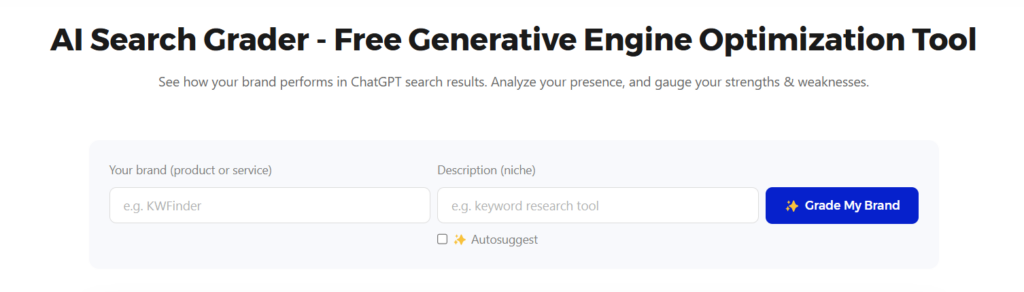
Mangools offers a user-friendly, cost-effective GEO tool perfect for small businesses aiming to improve their visibility in generative AI search results.
We used their free report grader, but we’re not impressed with the results.
Key Features:
- Visibility scoring
- Competitor analysis
- Quick evaluations and prompt generation
Pros:
- Free and accessible
- Intuitive interface
- Suitable for small businesses
10. HubSpot AI Search Grader
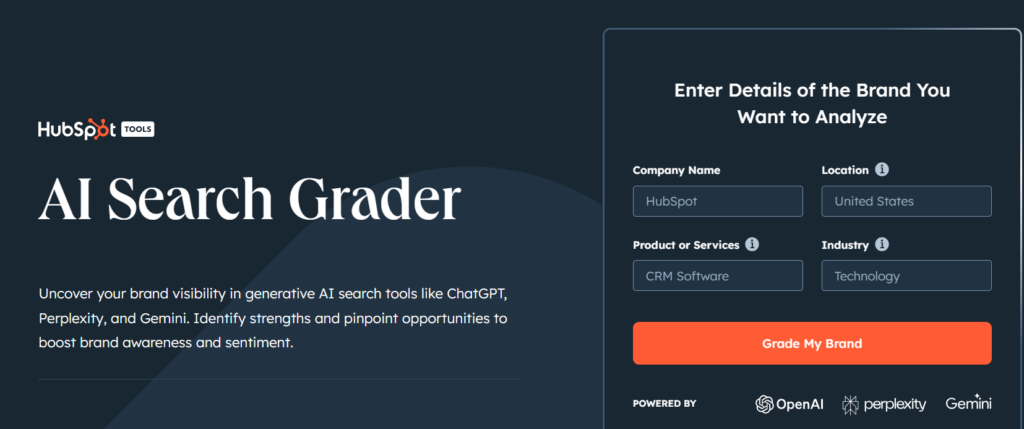
HubSpot’s AI Search Grader helps marketers evaluate their brand visibility in AI-generated search, providing actionable insights to improve rankings. Their AI Search Grader was once among the first, if not the first, solution to help you understand your business’s presence in generative engines, but it was more like advice than accurate data.
We tried their AI grader but were not impressed by the results, as it uses ancient data from 2023. Their model is based on obsolete information.
Key Features:
- Visibility and ranking analysis
- Performance metrics tracking
- Seamless HubSpot integration
Pros:
- Completely free tool
- Easy integration with HubSpot ecosystem
- Immediate actionable insights
Why GEO Tools Are Essential for 2025
GEO tools have become indispensable as AI transforms search behavior. Leveraging these tools allows marketers to gain deeper insights, ensuring their brands remain highly visible and relevant within generative AI platforms. Implementing GEO is crucial to maintain competitiveness in the rapidly evolving AI-driven search landscape.
Optimizing Your Strategy with GEO Tools
To harness the full potential of GEO:
- Combine Multiple GEO Tools: Gain comprehensive insights by integrating data from multiple tools.
- Consistent Monitoring: Regularly monitor your brand’s generative AI performance and adjust your strategy based on real-time data.
- Content Quality: Ensure your content is structured, authoritative, and optimized for generative AI.
- Stay Current: Keep pace with emerging AI developments to refine your optimization strategy continuously.
Generative Engine Optimization represents the future of digital visibility. Businesses can significantly enhance their presence in AI-generated search environments by employing leading GEO tools. At TUYA Digital, we’re committed to helping brands navigate and succeed in this evolving landscape, leveraging the power of GEO to secure optimal digital visibility.